A match is ninety minutes of information, and most of it passes by once and is gone. The patterns that decide games sit inside that noise. A full-back who drifts narrow under pressure, a midfield that loses its shape after the hour, an opponent whose first move is always the same. They are easy to miss in real time and expensive to overlook.
Tactical analysis is the work of finding those patterns and turning them into something your coaching team can use. Here is how I approach it.

I watch the whole match first
I let the match play through before I judge any of it. The first viewing is for feel, for the rhythm of the game and the story it tells. As it plays I mark timestamps so I can return to the moments that matter without hunting for them later.
This is where reflexive thematic analysis shapes the work, a method I use in my academic research. I become familiar with the match as a whole before I break it into parts. Then I go back through it deliberately, labelling what I see across build-up play, positioning, defensive structure, chance creation, and team psychology. The patterns are not decided in advance. They surface through repeated and careful viewing, and I move back and forth through the match rather than settling on a verdict too early.
I trace the cause, not just the moment
This is where attention to detail does the work. I am not only noting where players stand when a chance is created. I can trace it back, often several phases earlier, to the decision that opened the door. I pick up weaknesses that develop as a match wears on, and I identify opposition traits that your team can plan to exploit.
It is the difference between knowing that something happened and knowing why. The why is what you can coach.
I test what I see
A pattern only earns its place when it holds. I check what I notice against the rest of the match, and I am willing to be wrong. Some reads strengthen the closer I look. Others fall away. Only the patterns that tell a true story of the game reach your report.
This is the part that keeps analysis honest. It stops the work from becoming a search for evidence to fit an opinion already formed, and it means what you receive is what the match actually showed, not what I went looking for.
I make it clear on video
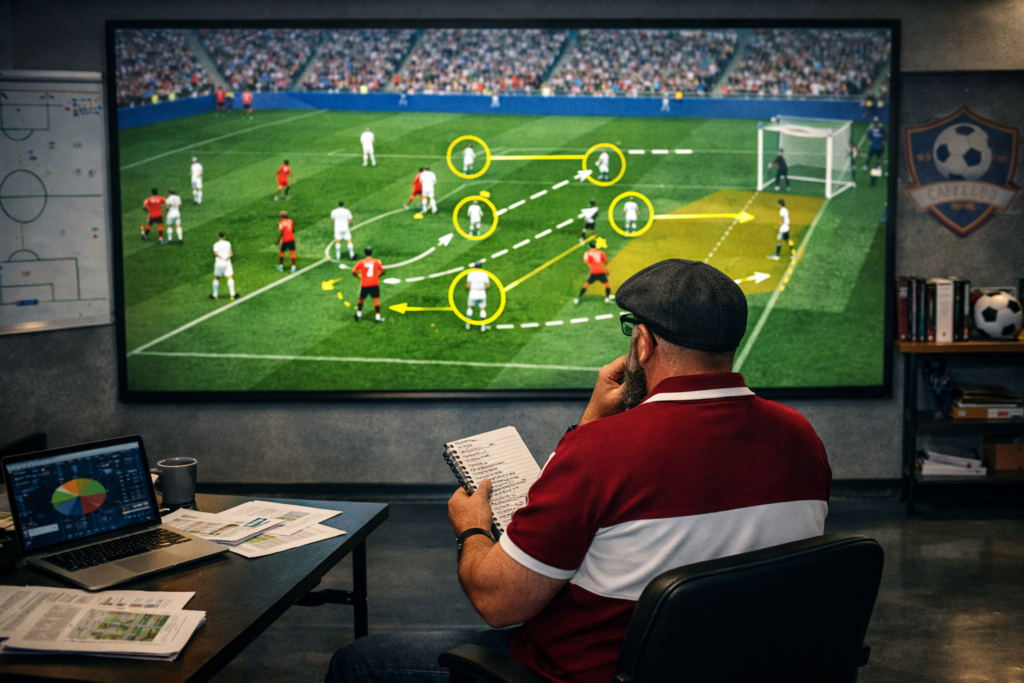
Insight only helps if a coaching team can act on it. I take the key moments and telestrate them, colour-coding each team, marking the passing channels, and drawing out the movement that words alone would miss. The result is a playlist of teachable moments, organised and ready to take straight into a session.
Built around your department
Every piece of work is shaped to your priorities. If you are focused on attacking play, the analysis is built around it. If defensive organisation is the concern, that leads. If you want a specific opposition player broken down, I set out their attributes alongside the weaknesses you can target.
See the work
The clearest way to judge analysis is to watch it. Here is a piece I produced for another team.
Have a match to review or an opponent to break down? Get in touch and I’ll build the analysis around what your coaching team needs.